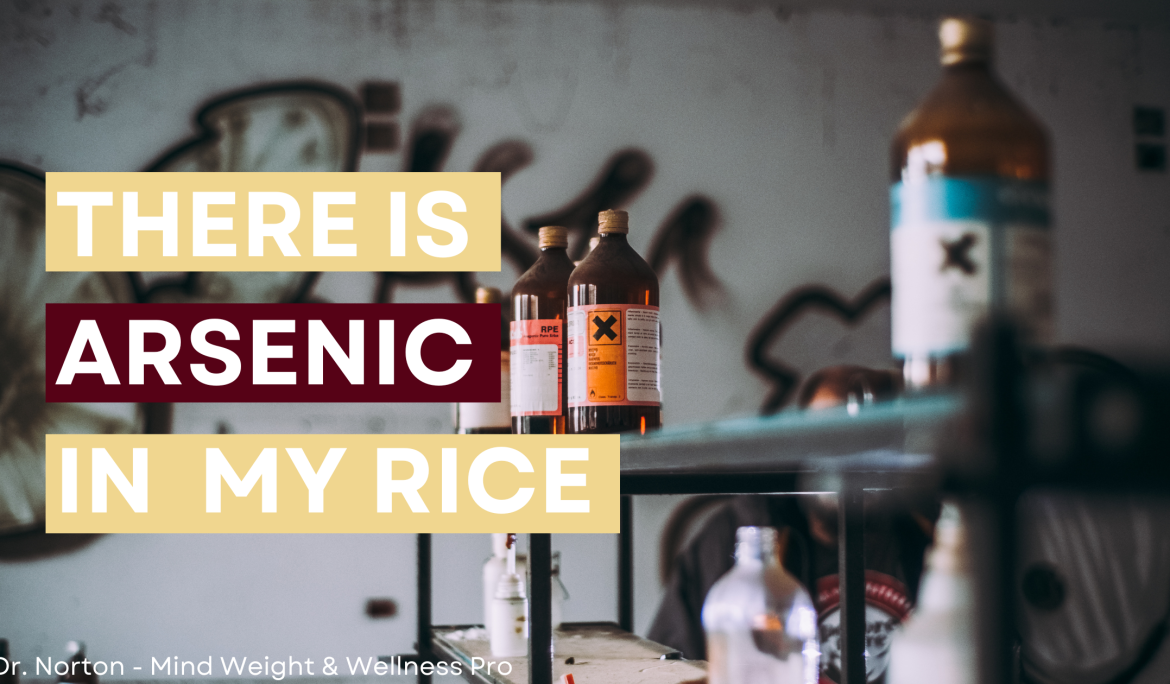
Rice is loaded with arsenic, so much so that several years ago they took many bottles of wine and lots of baby rice cereal off the shelves because it was creating a hazard.
To be clear, there is always arsenic in the soil, and therefore in our food. But it is usually at very low levels, so not terribly toxic. Unfortunately, over the last few decades soils have been depleted of so many of the other minerals, that the levels of arsenic are relatively higher. In other words, that’s almost all that’s left.
In addition, some plants simply absorb more of the arsenic. Rice is one of those plants.
So What’s A Body To Do?
-
Understand that all rice is subject to high levels of arsenic and find a substitute. Quinoa works, but I prefer hemp seed florettes because they are so high in protein. The hemp seed florettes, unlike rice, are actually loaded with protein. They taste amazing, and did I mention how much protein they have in them? 10 g per 2 tablespoons!
-
If you are going to eat rice, choose wild rice, as it seems to absorb less of the arsenic than the basmati or white rice.
Speaking of wild rice, did you know that wild rice is actually not rice? It’s a grass! It has a lot more fiber and it doesn’t raise your blood sugar levels nearly as much as white rice does. The only disadvantage with wild rice is you have to cook it much longer than white rice. I find that you have to double the amount of cooking time that the instructions give you to get a good texture. But it’s worth it. It has much more fiber, it’s much more interesting from a textural point of view,(not mushy like white rice) and it has a better flavor.
I’ll bet you didn’t know white rice is the standard used to compare foods in terms of how much they raise blood sugar levels. That is correct. Rice has one of the highest glycemic load foods. If not the highest. Recall that glycemic load is how much a food raises our blood sugar levels. Also recall that the only way you can gain weight and store fat is to raise your blood sugar levels. So white rice is one of the most fattening foods that we eat. That’s how bad white rice is for you even without the arsenic when it comes to weight management.
Cooking Rice
If you are going to eat rice, cook it for half of the time that you would normally cook it, dump out the water, rinse it with clean water, add freshwater to the pot and finish cooking it. That has been shown to remove a significant amount of the arsenic.
I usually make enough wild rice for 4 to 6 servings. I eat it for a couple nights, save it, and eat it a few more nights and then later in the week I use what’s left in soup. I make a mean chicken and rice soup. A patient suggested I try a beef and rice version. I’ll let you know how that works out!
Jasberry Rice: A Really Good Rice
I have just discovered a new rice I can’t wait to share with you called Jasberry rice(https://www.wholefoodsmarket.com/product/jasberry-organic-readytoeat-superfood-rice-original-200g-705-oz-b0bjt9bmsd). It is dark purple and incredibly delicious. But more importantly It has been developed to have 40 times more antioxidants than brown rice and 133 times more than white rice! It is considered the world’s healthiest rice. It has been labeled a superfood because of its uniquely high levels of antioxidants. Most rice, especially white rice, raises blood sugar levels which cause weight gain. Jasberry doesn’t. I have eaten 1 cup of jasberry rice for three nights in a row with no weight gain! This rice isn’t just delicious and healthy, it goes the extra mile by reducing the risks of cancer, diabetes, and heart disease. What? Rice? Yes….. Jasberry rice. Beyond the health benefits, it has also been shown to improve skin and slow down the aging process. Finally, it turns out it takes half the time to cook as wild rice, and the texture and taste are to die for! Count me in!
How Does It Do All of This?
It was developed from a cross between 2 rice strains: Jao Hum Niu, a thai non-gluttonous purple rice, and Khoa Doevele Malifa. The purpose was to provide a rice that was the opposite of white rice (aka sticky rice) which, as i mentioned above, is notorious for raising blood sugar levels and thus causing weight gain and diabetes. I doubt the researchers ever expected it to be as successful as it has become today. If you are wondering if it’s expensive, It isn’t. $3.99 for a 7oz bag $7.99 for a 15 oz bag.
Let me know how you feel about the Jasberry rice and your favorite rice and how you use it. You can reach me at drnorton@eatingdisorderpro.com
Bon Appetit!