
What Is Leaky Gut Syndrome (LGS) and How Does It Contribute to Obesity?
By: Dr. J. Renae Norton
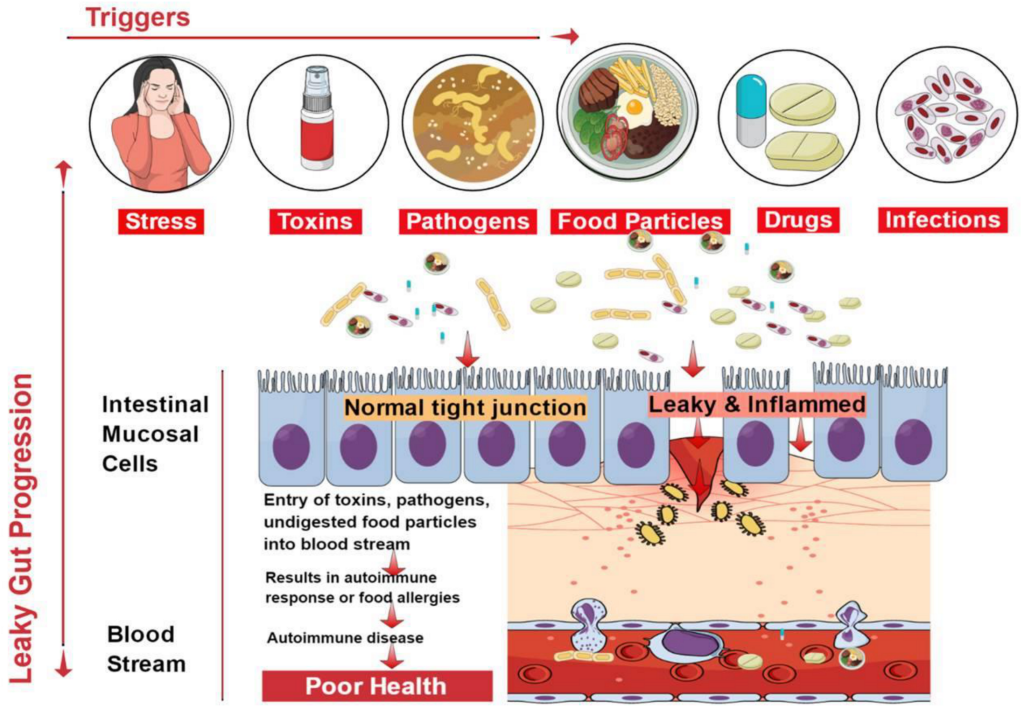
Leaky Gut Syndrome (LGS) is an inflammatory state resulting from hyper-permeability of the small intestine: Translated: the lining of your gut has holes in it allowing the food to “leak” out into the bloodstream. The lining of a healthy gut selectively keeps the chemicals needed by the body in, while keeping toxic chemicals out. LGS is caused by anything that damages the lining of the GI track making it more permeable.
Besides polluted foods, especially those sprayed with Glyphosate, there are a number of other things attacking our guts. They include medical treatments such as antibiotics, radiation, chemotherapy, or steroids, as well as aspirin, ibuprofen, naproxen, and/or other aspirin-like products. In addition, alcohol increases the permeability of the gut. Ironically, alcohol is often used (or abused) to ease the gastrointestinal pain we cause ourselves by eating “Polluted” foods. Talk about a vicious cycle.
Medical treatments and alcohol are good examples of how the solution can become the problem.
LGS is difficult to diagnose because it involves the two systems in the body that function to keep us healthy, the liver and the immune system. Because these two systems do such a good job, it can take years for symptoms to develop and even longer to be diagnosed. LGS is probably one of the most prevalent, yet undiagnosed conditions impacting the health of Americans. I rarely see a patient suffering from an Eating Disorder (ED) or from obesity that does not also suffer from LGS.
There are some authors who say that 100% of Americans suffer from Leaky Gut. That probably is an over-estimate but I get why they take that position…The widespread frequency and critical importance of leaky gut syndrome has been grossly underrated in clinical medical practice. It has been reported in association with an enormous range of acute and chronic diseases, as well as in asymptomatic persons and yet we see very few doctors “diagnosing” it.
In one study that tested for leaky gut syndrome in an intensive care unit, all patients studied had leaky gut syndrome, regardless of what was wrong with them. Because of the incredibly high incidence of chronic diseases today, and the high frequency of LGS in chronic diseases, it seems reasonable to test for intestinal permeability at least in these patients routinely. It could be further argued that it is an appropriate general screening test for everyone. That is definitely not happening. For more on this phenomenon see Leaky Gut Syndrome by Len Saputo, M.D.
Footnote: I tested positively for Leaky Gut, treated myself mostly by eliminating conventional foods, eating all organic, and supplementing with or drinking bone broth, re-tested and no more leaky gut…so it is not hard to treat.
Here’s the thing: Autoimmune disease is epidemic in the US today. So what? YOU CANNOT HAVE AN AUTOIMMUNE DISEASE WITHOUT HAVING A LEAKY GUT!
You heard that right. The conditions that arise from LGS are many and varied. It shows up along with parasites, inflammatory bowel disease, and irritable bowel syndrome. It also appears to be driving autoimmune disorders such as Celiac Disease, Crohn’s Disease, Fibromyalgia, and Lupus to name a few. In addition, it drives many of the same disordered eating behaviors found among Obese, Bulimic, and Binge Eating Disorder patients.
We have always had carcinogens, heavy metals, contaminants and allergens. The difference is that now we have polluted foods with soooo much more of these pollutants. Even more importantly, we have pollutants that are highly addictive, such that we can’t stop eating them.
In addition to causing a disruption of the systems designed to protect the body, some of the pollutants also disrupt our brain chemistry, causing, are you ready for this? Leaky brain! When this happens, we become addicted to these pollutants, and we overeat them even more. Such an addiction further breaks down our body’s defenses such that we are no longer able to fight off illness. In previous articles I have mentioned that we are the “unhealthiest/wealthiest” country in the world. This is why.
Polluted food does three things that may account for the escalation in these relatively new, somewhat confusing conditions:
1. It attacks the gut– Because 70% of the immune system is in the gut, polluted food causes tears, which allow the contents to leak into the body, where they are treated as foreign matter that the immune system must destroy. As a result, every organ and system in the body is at risk. This explains why so many different health issues are on the rise.
2. It attacks the brain – Polluted food damages the parts of the brain that regulate eating behavior, primarily via the endocrine system, resulting in food addictions, overeating and specific food cravings. The result is dieting, restricting, over-eating, bingeing, bingeing and purging, unwanted weight gain and its complications and unhealthy weight loss and its complications.
3. It attacks the liver – When toxins that should remain in the small intestine leak into the blood stream, they put a serious burden on the liver, the organ responsible for managing the body’s toxins. These toxins can take the form of free radicals and carcinogens when the liver is over-burdened, resulting in damaged organs and/or various types of cancer.
The upshot is that we end up with disorders that develop slowly, become chronic and drive diseases that can be life-threatening. They present with a fairly broad spectrum of symptoms, some of which are actually conditions themselves. The early signs of Food Pollution make it less likely that we will identify the causes and more likely that we will treat only the symptoms. Treating the symptoms often leads to a worsening of the problem and creates a self-perpetuating vicious cycle that ultimately ends up damaging organs and systems permanently.
So the question is where are our doctors? As is typical today, the medical community generally does not respond until we achieve a disease state, and even then it does not treat the “cause” of the disease, it treats the symptoms, making recovery significantly less likely.
Stay tuned for a follow-up article that will focus on the symptoms to look for and what you can do to protect and/or heal your leaky gut/brain.