BY: Dr. J. Renae Norton

Americans today are experiencing a catastrophic decline in their health, in comparison to other wealthy countries. We are the most obese country in the world with the most obese children. Charles Kettering said that “A problem well-defined is a problem half-solved.” Clearly, we have not defined the problem well because we certainly are not solving it. Across the board, irrespective of age, gender, socioeconomic status, race, and lifestyle, Americans are getting sicker and fatter. But our children may be paying the highest price. More than 1/3 of U.S. children today are obese. Compared to the 1 in 10 children when I was a child; 60 years ago.
In my practice, I have seen 10-year-olds with Type 2 diabetes and 15-year-olds with metabolic syndrome (high blood pressure, obesity, high cholesterol, and high blood sugar.) Both of these conditions usually occur in people in their 50s or 60s. I shudder to think what this means when it comes to the aging experience of these children. One thing we do know according to current projections, is that U.S. children will live shorter lives than their parents, which is a first in modern history. It is unprecedented unless there was a nuclear event.1
It is important to put this one into perspective, so let’s unpack it. Childhood life expectancies decrease in third world countries where there is famine or plague, but not in wealthy, developed countries where there is an abundance of food and good medicine, as is the case in the U.S.
Likewise, the children with the best infant survival rates are usually from wealthy developed nations. The only exceptions have been when there was a nuclear bomb or a nuclear power plant leak like Fukushima. We have not had a nuclear bomb or a Fukushima here in the U.S.. And yet, our children are destined to live shorter lives than their parents and are more likely to die at birth than children in almost any other developed wealthy nation. 2
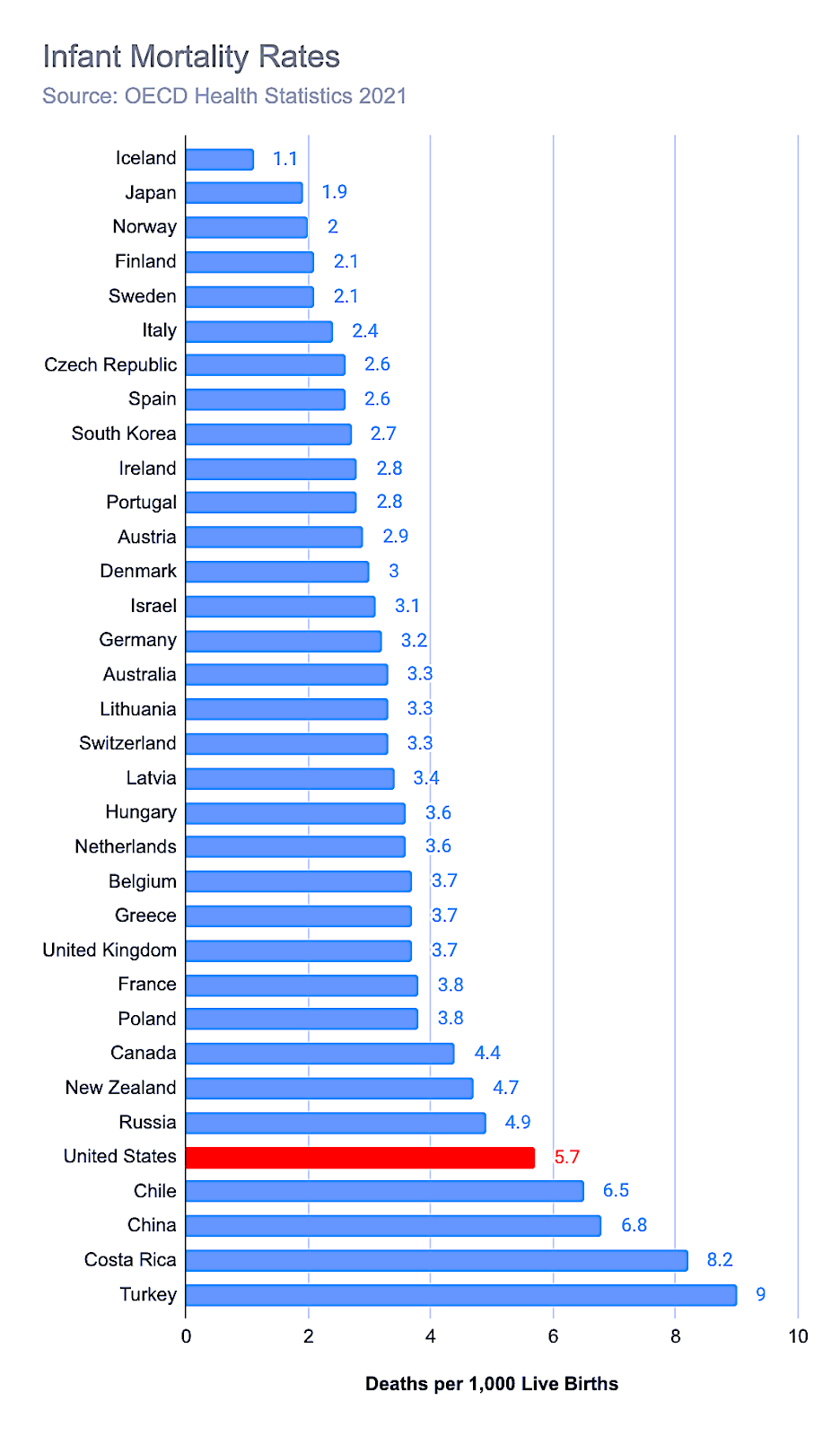
Bottom line: For U.S. children who survive being born, it is still an uphill battle when it comes to living a long and healthy life because a very high percentage of them are obese from the start and will likely live their entire lives being obese. Being obese from childhood has a devastating impact both medically, financially and psychologically.
In 2013 there were a number of predictions with regard to obesity, one of which was that 43% of the U.S. population would be obese by 2018. Turns out that the number crunchers were spot on in this prediction. Presently, we are surpassing 43% obesity in the US population overall. In fact over 73% of US adults are either overweight or obese.3
But what is really frightening is although my generation started out obese, over 70% of us are overweight, today. In the chart below, I have summarized the research on what is happening to US children. What sort of future will they have? If they follow the same trajectory as my generation, they will all be obese by the time they are in their 50’s and 60’s.
The question is why is this happening? In my humble opinion, a small part of the problem is the result of poor eating habits and lack of exercise, but the majority of the problem is the result of food pollution. To some degree we have always had a portion of the population that ate poorly and didn’t exercise. They represented about 10% of the population. As mentioned previously, today ⅓ of children are obese and 73% of adults are overweight or obese. What happened? Big Farming and Big Food got greedy, that’s what happened. The foods that we assume are safe, are not.
But before we get into the ways in which we are being poisoned, let’s start with the eating habits of our children. According to the National Institutes of Health in a 2021 report on eating trends in children, 92.7% of US children eat some form of junk food every day.4
The data in the following table breaks down everything I could find to help explain what U.S. children today are facing. All found in “Childhood Obesity Facts: Overweight and Obesity” 5
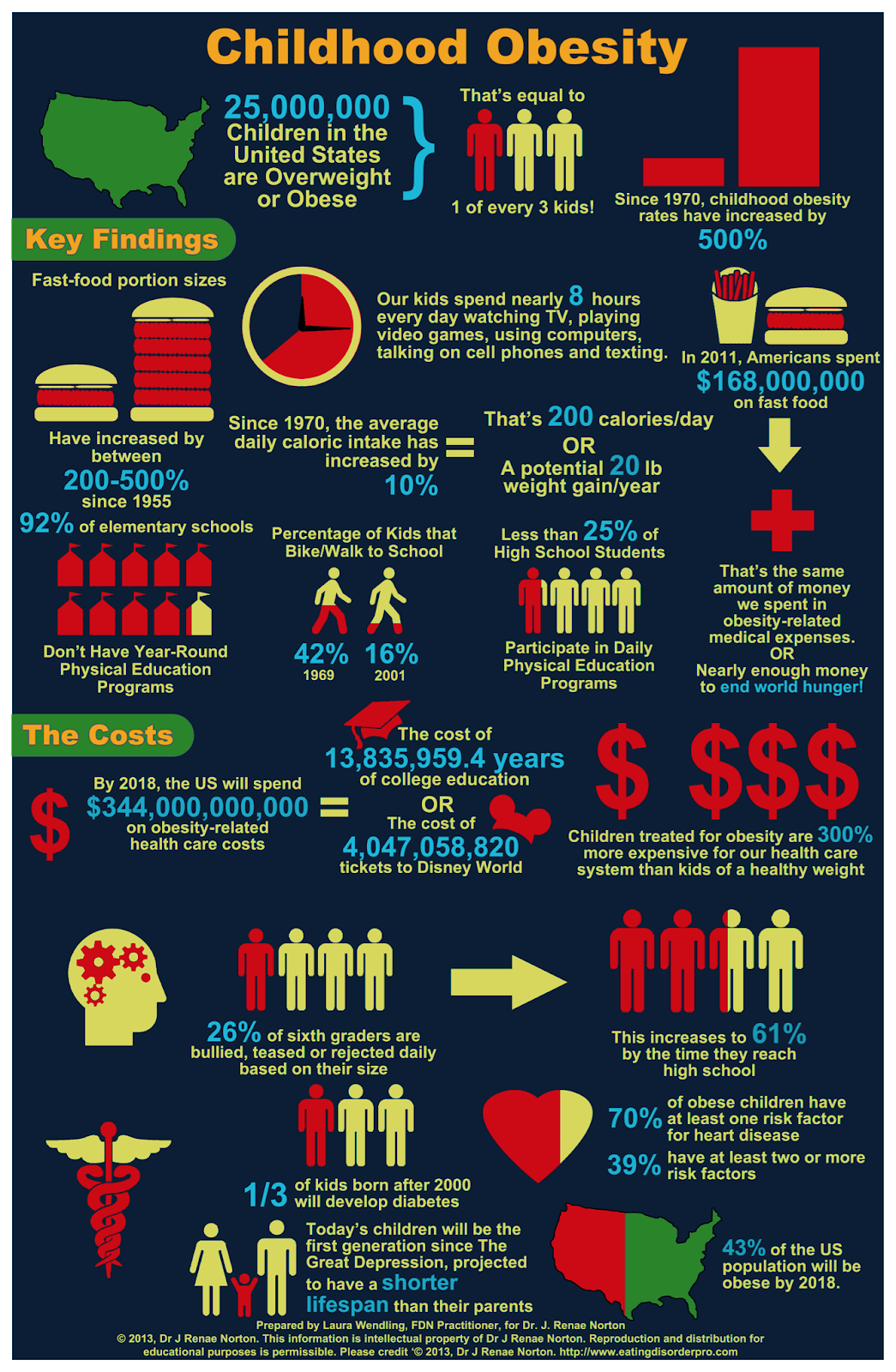
Then we have the Fast Food. Not only is it barely food at all, but we are eating more of it than ever before. Why do we eat so much of it? Well, one reason is it is fast. And we like it fast. But it is also delicious. Ask our taste buds. It is loaded with addictants and ingredients designed to get us addicted. It’s working. We eat a lot of it. Fast food portion sizes have increased by 200% since 1965. Since then, the average daily calorie intake increased by more than 10% which equals 200 calories a day or a 20 pound potential weight gain per year. The impact? A third of US children today are obese. Considering only the cost of obesity, we are talking big bucks…… Children treated for obesity are 300% more expensive for our health care system than those who are a normal weight.
But even worse is the psychological toll. According to the chart, more than 26% of sixth graders were bullied or teased because of their size. This increases to 61% by the time they reach high school The bullying increases the likelihood of depression as well as suicide.
Worst of all, 1 out of every 3 children born after 2000 will develop diabetes. Seventy percent of obese children have at least one risk factor for heart disease and thirty-nine percent have two or more risk factors. Remember that people who are obese pay more out of pocket than those who are not. In fact, the medical costs for people with obesity are $1,429 higher each year than those of people who are a normal weight..6
Why is this happening? Because U.S. foods are polluted, so polluted that even if your child does binge on junk food or eat fast food they are still in considerable danger. In fact, U.S. food is some of the polluted food in the world, compared with the food in most other countries. Want to know more about Food Pollution? Tune in to my weekly podcasts staring in October! Time and dates TBA!
- Obesity cuts US children’s life expectancy short. (2011, January 13). Medical Xpress. Retrieved January 25, 2022, from https://medicalxpress.com/news/2011-01-obesity-children-life-short.html pg. 59 ↩︎
- An obesity epidemic has hit the Baby Boomer Generation. TheStreet. Retrieved September 21, 2022, fromhttps://www.thestreet.com/retirement/an-obesity-epidemic-has-hit-the-baby-boomer-generation-13880950 pg.58 ↩︎
- Centers for Disease Control and Prevention. (2022, June 22). Infant mortality. Centers for Disease Control and Prevention. Retrieved September 21, 2022, from: https://www.cdc.gov/reproductivehealth/maternalinfanthealth/infantmortality.htm pg. 59 ↩︎
- Junxiu, Liu. In total, 92.7% of US children and 86.0% of US adults reported at least some junk food consumption on any given day. Higher percentages of junk food consumption among children compared with adults were observed across all population subgroups.J Yujin Lee, Yujin Lee, pg. 61 ↩︎
- Childhood Obesity Facts | Overweight & Obesity. (n.d.). CDC. Retrieved January 3, 2022, from https://www.cdc.gov/obesity/data/childhood.html Trends in junk food consumption among US children and adults, …pg.61. ↩︎
- Monaco, K. (2020, December 11). Over 73% of U.S. adults overweight or obese. Medical News. Retrieved September 21, 2022, from https://www.medpagetoday.com/primarycare/obesity/90142 pg.61 ↩︎