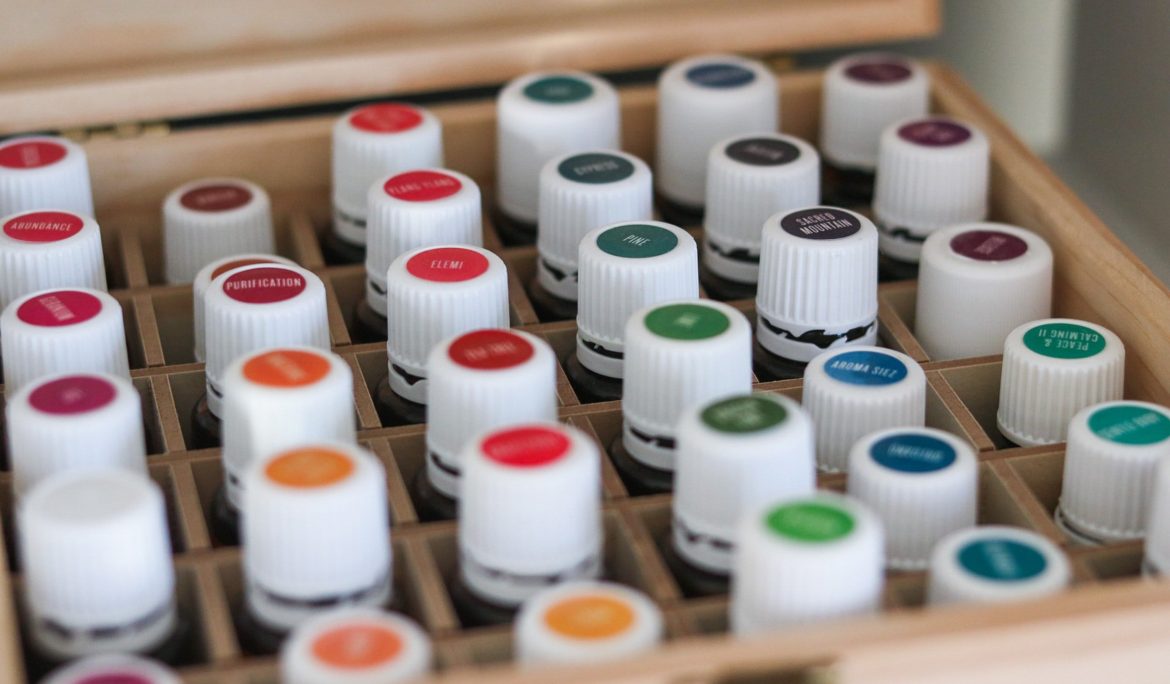
Last week, I introduced this series on essential oils by describing the amazing benefits of oregano oil. This week I want to share some oils that can help relieve anxiety, and potentially the symptoms of eating disorders as well. I have often talked about the relationship between anxiety and eating disorders. For example, in a previous article, I made the case that an eating disorder is in fact an anxiety disorder with a focus: lose weight. But still an anxiety disorder. With that said, here are some essential oils that have been shown to help decrease levels of anxiety that I have found to be helpful for someone suffering from anorexia.
Let\’s begin with lavender oil. Known for its floral and calming scent, lavender oil was put to the test to see if it could reduce anxiety in patients preparing for dental surgery and it did! Some patients were asked to smell lavender oil before undergoing a dental procedure while others did not. The researchers recorded the patients’ vital signs (blood pressure, respiratory rate, heart rate, and blood oxygen saturation) before, during, and after the procedure. The patients that smelled the lavender oil before showed calmer vital signs, which means less anxiety.
Another study looked at the effect of lavender and rosemary oil on nursing students preparing for a big exam. Some students were asked to smell lavender oil and others smelled rosemary oil before and while taking the test. The control group did not use any oils. All students rated their anxiety before and after the test. Interestingly, and unexpectedly, the students who smelled the lavender oil felt calmer, but they also felt slightly less focused. In comparison, the students who smelled rosemary oil felt much less anxious and more focused overall. The moral of the story, use lavender oil to relax and rosemary oil to study and/or focus.
In another study, researchers wanted to test the effectiveness of rose oil on patients preparing for surgery. In this study, three groups of patients were asked to fill out an anxiety questionnaire and their vitals were monitored. One group received aroma therapy with rose oil in a diffuser, the second group received diffuser treatment with no rose oil, and the third group received no diffuser treatment. Researchers found that the patients who received the rose oil aromatherapy were much less anxious compared to patients who did not receive the rose oil treatment. So rose oil lowers anxiety.
Cortisol is another factor when it comes to anxiety. It is known as the stress hormone. I previously covered the effects of long-term anxiety and chronically high levels of cortisol. In one study, researchers tested the effectiveness of basil leaf oil on mice with depression by looking at the cortisol (stress hormone) and serotonin (which regulates mood) in three groups of mice. A “normal” group, a “depressed” group, and a depressed group treated with basil oil. Turns out that the group treated with the oil had significantly lower levels of cortisol compared to the other groups. The treated group also had higher levels of serotonin signifying a “good mood”.
One last study that I want to bring to the table is one that looked at the effectiveness of an aromatherapy blend of lavender, rosemary, rose, and basil (ratio of 1:1:1:1). Researchers studied the effects of this blend of essential oils on middle-aged women with frequent headaches and anxiety. They checked their cortisol levels before and after the study and compared them to a similar group not treated with the oils. The results showed that the blend of essential oils reduced headaches, anxiety, and cortisol levels in the test group.
Bottom line, these oils are wonderful at reducing anxiety and in turn, could help in reducing symptoms of eating disorders. Best of all, they have none of the terrible side effects of today\’s anxiety meds. Stay tuned for more information on the power of essential oils. In our next article, I will help you with skin issues and smelly feet.
Essential oils can be used three different ways:
-
Aromatic – Diffusing in water, a few drops on your hands or fabric to breath in, or just smell it straight from the bottle
-
Topical – Applied to the skin after diluting in a carrier oil such as coconut oil
-
Internal – They can be taken directly as a drop, mixed in a drink, or put in vegetable capsules. Only ingest essential oils that have been certified as GRAS (Generally Regarded as Safe). Check out this link to find safe essential oils to take orally.
Sources:
-
Karan, N. B. (2019). Influence of lavender oil inhalation on vital signs and anxiety: A randomized clinical trial. Physiology & behavior, 211, 112676.
-
McCaffrey, Ruth DNP, ARNP, FNP-BC, GNP-BC; Thomas, Debra J. DNS, RN, FNP/ANP; Kinzelman, Ann Orth RN. The Effects of Lavender and Rosemary Essential Oils on Test-Taking Anxiety Among Graduate Nursing Students. Holistic Nursing Practice: March 2009 – Volume 23 – Issue 2 – p 88-93 doi: 10.1097/HNP.0b013e3181a110aa
-
Dagli, R., Avcu, M., Metin, M., Kiymaz, S., & Ciftci, H. (2019). The effects of aromatherapy using rose oil (Rosa damascena Mill.) on preoperative anxiety: A prospective randomized clinical trial. European Journal of Integrative Medicine, 26, 37-42.
-
Sentari, M., Harahap, U., Sapiie, T., & Ritarwan, K. (2019). Blood Cortisol Level and Blood Serotonin Level in Depression Mice with Basil Leaf Essential Oil Treatment. Open access Macedonian journal of medical sciences, 7(16), 2652–2655. https://doi.org/10.3889/oamjms.2019.819
-
Cha, J. H., Kim, M. J., Kim, H. S., & Kim, Y. I. (2010). Effects of aromatherapy in blending oil of basil, lavender, rosemary, and rose on headache, anxiety and serum cortisol level in the middle-aged women. Journal of Korean Biological Nursing Science, 12(3), 133-139.
-
Camp, D. (2021). How to Use this Book. In My Essential Oil Companion (pp. 4–6). essay, Harvest House Publishers.