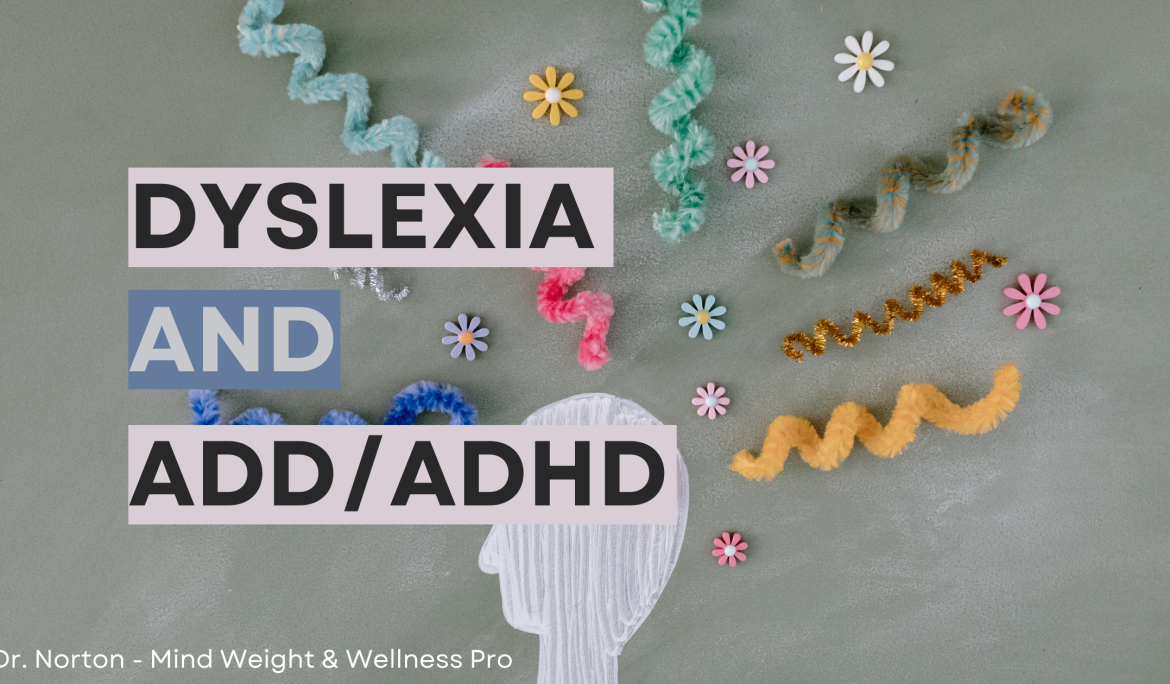
Dyslexia is a brain-based specific learning disability (LD). It affects a person’s language ability, making it difficult to learn to read, spell, decode, and recognize words. ADD/ADHD is a neurobehavioral condition characterized by patterns of hyperactivity in some and lethargy in others, inattention, and impulsivity. The two conditions can have overlapping characteristics and be completely different, but it is also common for them to occur together. Children with ADD/ADHD are more likely to have a learning disability than children who do not have ADD/ADHD.
The Connection Between ADD/ADHD and Dyslexia
In the past, ADD/ADHD and dyslexia were viewed as being independent of each other. However, research has shown that when it comes to the brain, impairments related to ADD/ADHD also occur with dyslexia. This can lead to a number of complications, including low academic achievement and poor self-esteem. For the ADD/ADHD individual, support and behavioral strategies can help. For the dyslexic individual, educational programs can help with the skills needed to improve reading abilities.
Although ADD/ADHD and dyslexia are separate conditions, in people who have both, we find that they have broad executive function impairments (problems focusing, using working memory, etc.), as well as an impairment of the particular skills needed for reading such as processing symbols swiftly. Sometimes it is difficult to tell the two disorders apart. They are both neurobehavioral disorders, but while ADD/ADHD involves attention which can make it hard to read, dyslexia affects learning to read. Here are three examples:
Distraction
Both children with ADD/ADHD and dyslexia can appear distracted; however, the reason behind the distraction is different. A child with ADD/ADHD might appear distracted because it is difficult for them to pay attention, while a child with dyslexia might seem distracted because reading requires a great deal of effort and their energy has dwindled. If, for example, they are unable to read the assignment, they may focus on the aunt crawling on the windowsill instead.
Fluency
Fluent readers are able to read with accuracy and sufficient speed to comprehend what they have read. A child with ADD/ADHD may not be a fluent reader because they lose their place easily or skip parts because their fast brain has raced ahead. So they go too fast to comprehend.
On the other hand, someone with dyslexia might not be a fluent reader because they spend a long time sounding out each word and still end up reading words incorrectly. By the time they get the word sounded out, the other words are forgotten. So they go too slow. In both cases, comprehension is negatively impacted.
Writing
Writing and penmanship can also be problematic for both the ADD/ADHD and dyslexic. The ADD/ADHD has problems with organization and proof-reading, while a child with dyslexia has problems with spelling, grammar, organizing ideas, proofreading, and handwriting.
A good way to distinguish the two conditions is to remember that dyslexia problems occur mostly during reading and writing activities, whereas ADD/ADHD symptoms appear in many settings and are more behavioral in nature.
Complications of ADD/ADHD and Dyslexia
Having ADD/ADHD and dyslexia together can increase the complications of both conditions. People with dyslexia have problems with spelling, reading, and recognizing words. As a result, reading comprehension, vocabulary, and general knowledge is compromised compared to other children the same age who do not have dyslexia. Having ADD/ADHD at the same time can make it even more difficult for such kids to manage their dyslexic symptoms.
Diagnosis of ADD/ADHD and Dyslexia
The two conditions are diagnosed using different criteria and sometimes by different professionals. ADD/ADHD is identified by a psychologist, neuropsychologist, and some family doctors. Dyslexia is a condition that is often first identified by an educator who may then refer the individual to a school psychologist or neuropsychologist for diagnosis and further assessment.
Treatment of ADD/ADHD and Dyslexia
Medications are often prescribed to help children and adults manage specific ADD/ADHD characteristics. (LINK) Treatment for dyslexia, on the other hand, focuses on educational interventions to improve reading and fluency. (LINK TO DYSLEXIA)
Coping With ADD/ADHD and Dyslexia
One of the biggest challenges for children with ADD/ADHD and dyslexia is being able to feel good about themselves. Often, their confidence and self-esteem are low as they struggle with tasks that their peers may find easy. Some strategies that can help people cope include:
Identify
When children know they have a condition with a name, like ADD/ADHD and dyslexia, it helps them. They understand why they are the way they are, and it stops them from looking for explanations for themselves, which are often terms like ‘I am stupid’ and ‘I am dumb.”
Focus on Effort
Give your child positive feedback on the effort they put into a task rather than their results or grades. A child with dyslexia and ADD/ADHD has to work harder than other students, yet that effort is not always reflected in their grades. Knowing that their effort is recognized by you makes a big difference to a child’s self-esteem.
Encourage Activity Outside of School
When your child shows an interest in an activity outside of school, encourage it. Being good at something—whether it is a martial art, a sport, arts or crafts—builds confidence. It has a positive ripple effect on other areas of life, including school-related activities.
If you have a child who is struggling in school, reach out to us. I can help.